

The door cards that came from my supplier did the job, but they had a molded-in, leather-grain texture in the gel coat that, to me, made them look old and lazy. That’s not the look I want for this car. I also plan to pull molds off these parts and make the door cards in carbon fiber, and a smooth surface is a lot easier to demold than a textured one. So the texture had to go.
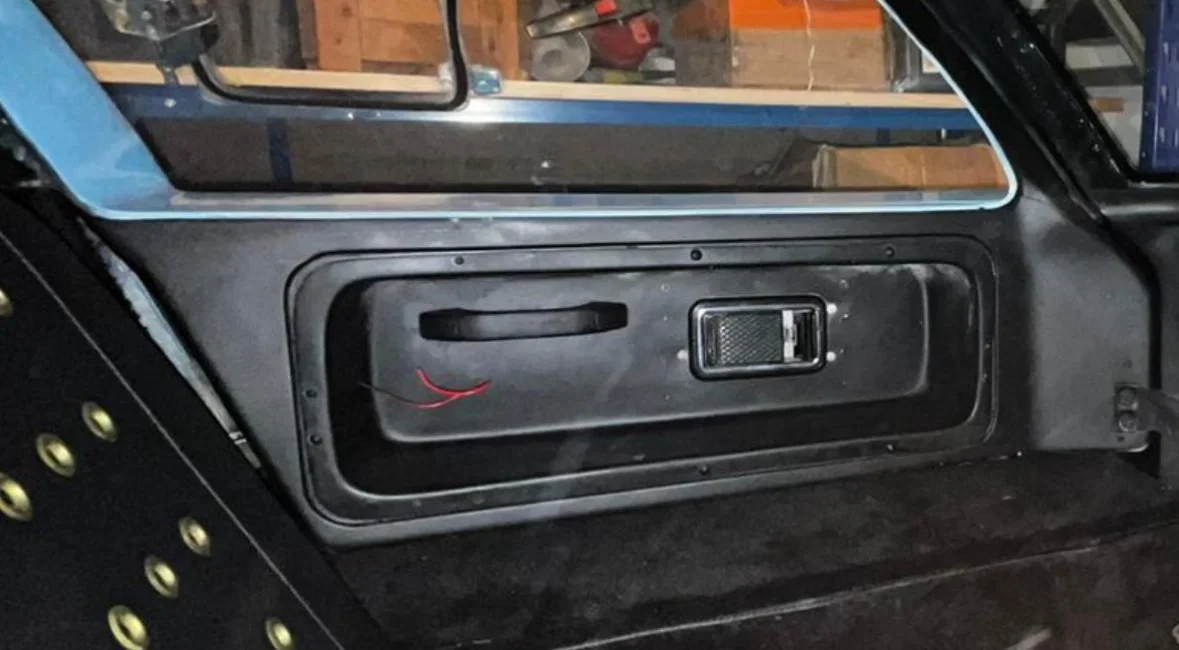
The goal. This is the look I was after: a clean, smooth door card with a simple pull handle and a recessed release. No fake grain, just crisp surfaces that suit the car.
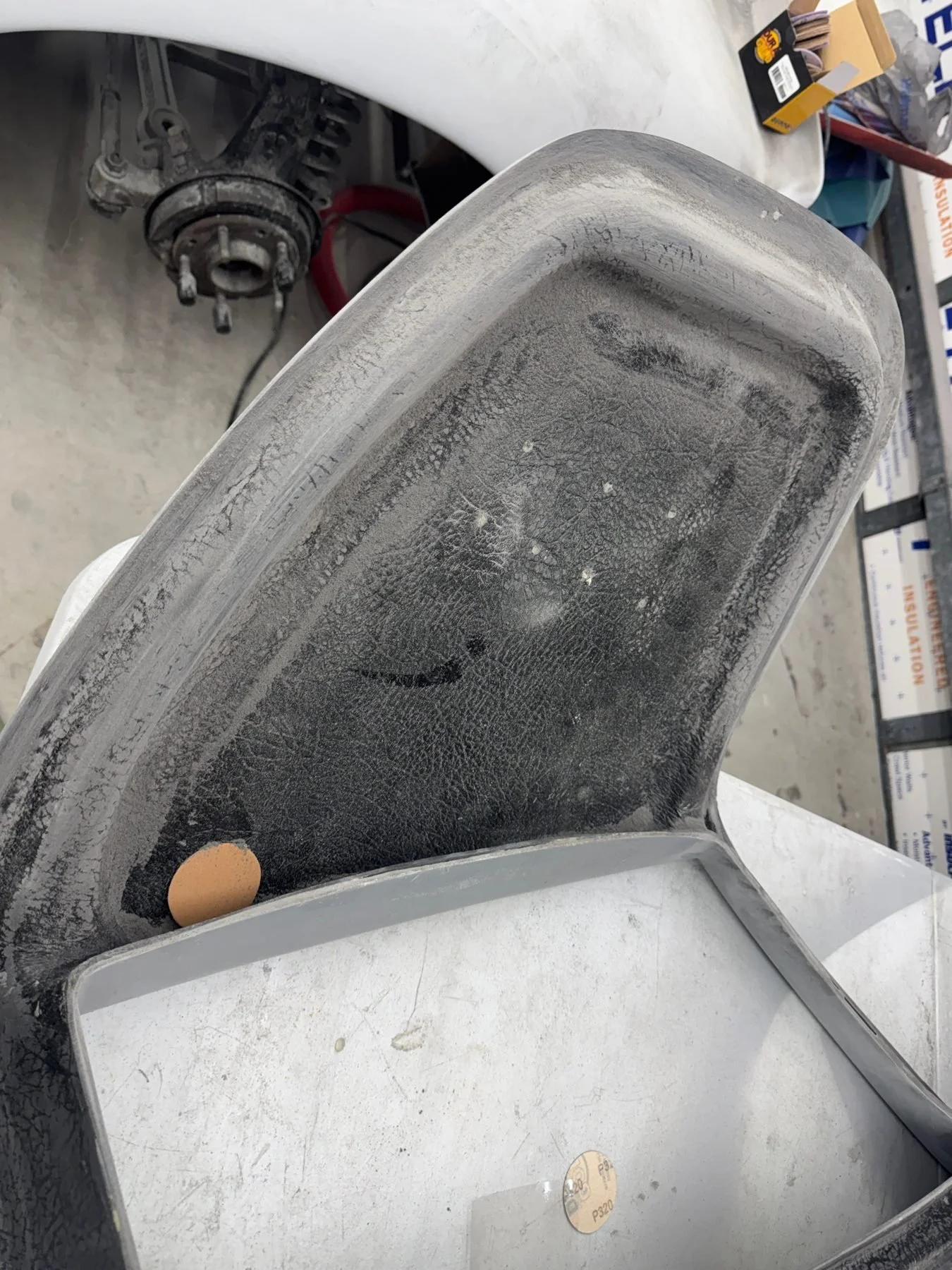
Here’s what the supplier’s parts actually look like. The leather-look grain is molded right into the gel coat. Paint won’t hide it, so all of it has to come off.
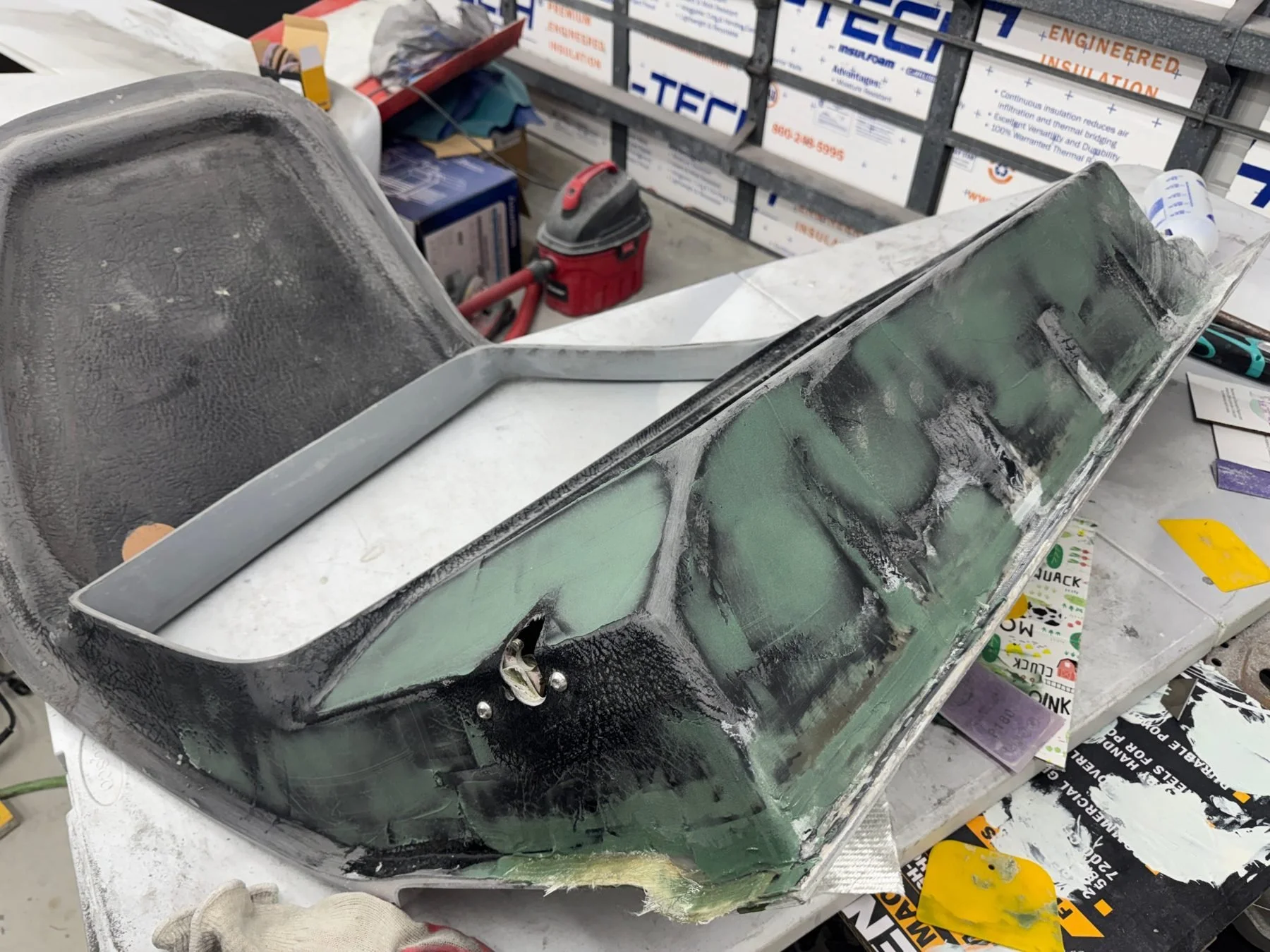
After the first round of sanding. I took the gel coat down as far as I could, filled the low spots and weak areas with fiberglass, and trimmed the edges where the two halves meet so the part is the same thickness all the way around. The green is filler, and the black is what’s left of the original texture.
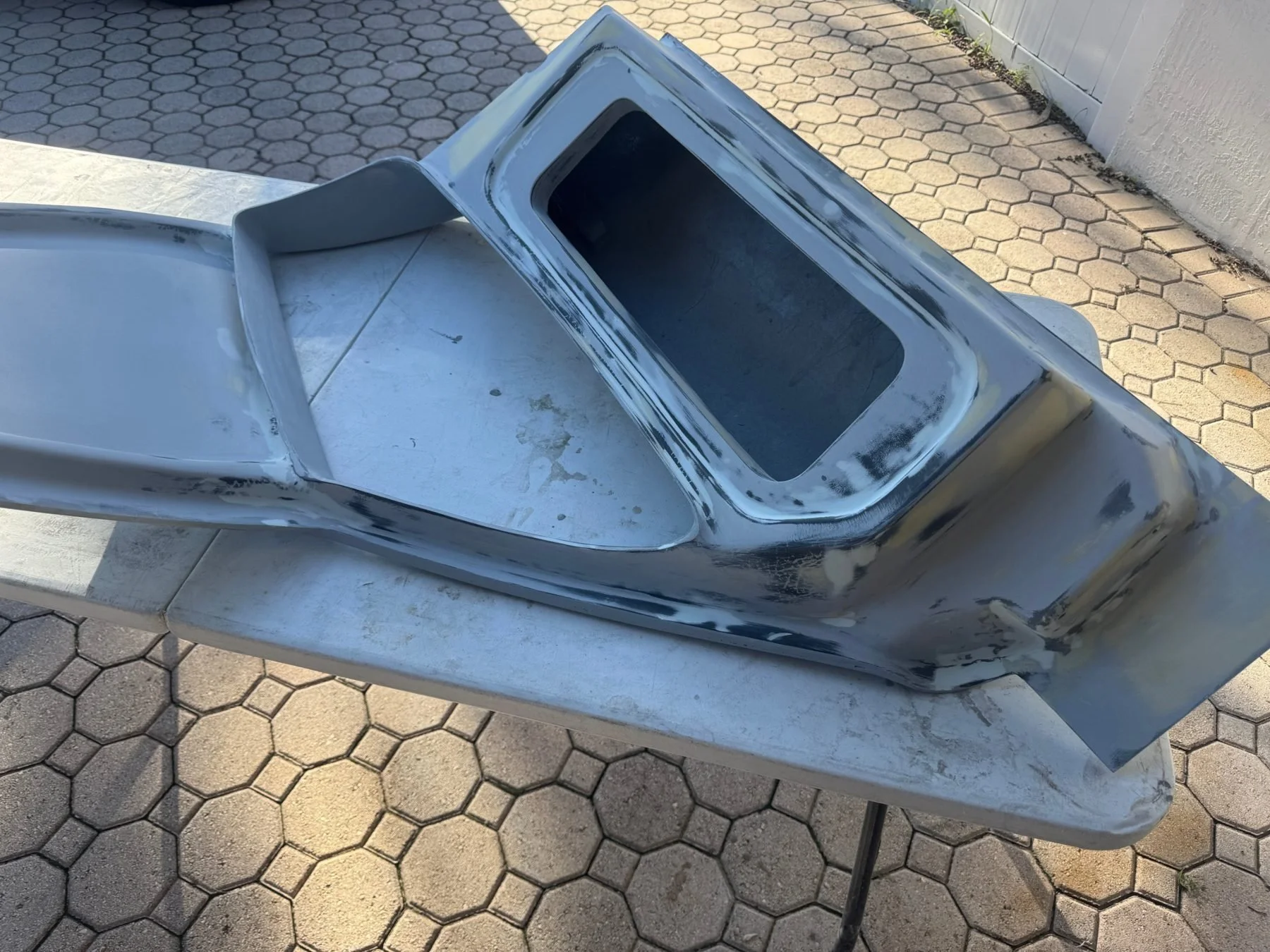
Block sanding with a guide coat. The dark patches show the low spots and leftover grain, and the lighter spots are fresh filler. I repeated this cycle of fill, prime and block until the guide coat sanded off evenly.
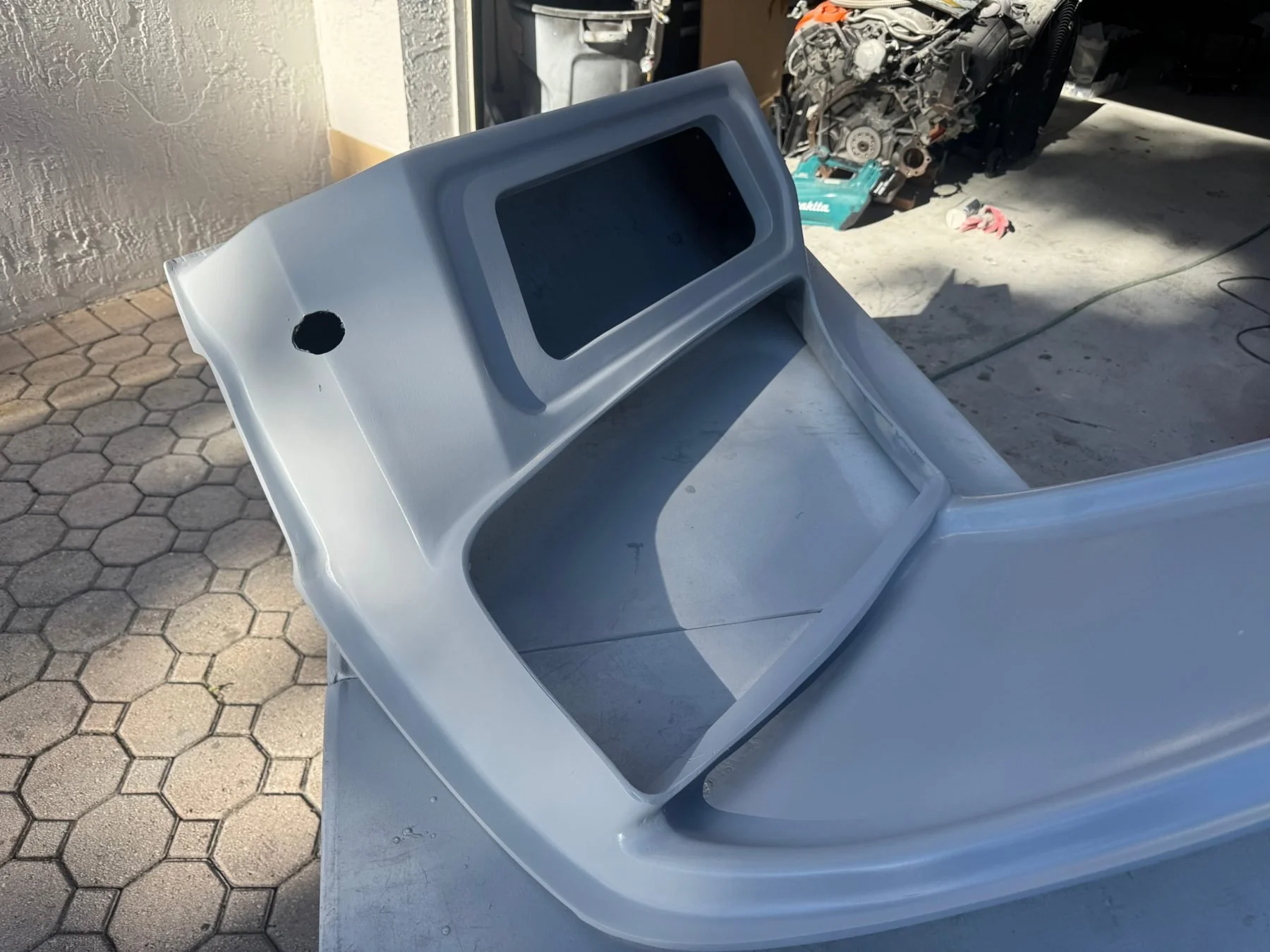
After several rounds of primer, the surface is finally smooth and even. The armrest pocket and the openings now have crisp, consistent edges.
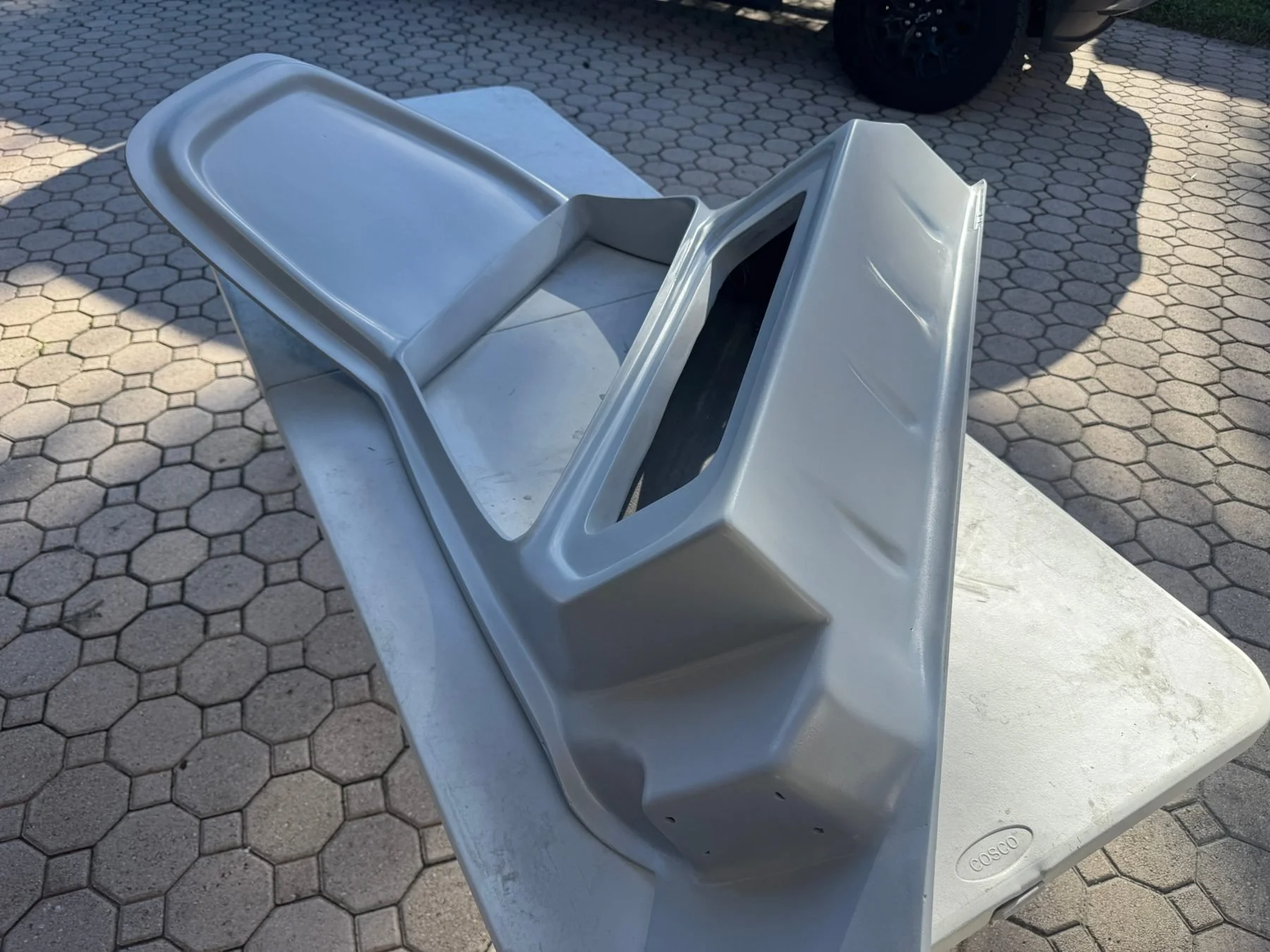
The finished door card in primer, ready for paint or to be used as a plug for a carbon fiber mold. A smooth surface releases cleanly from a mold, so every carbon copy made from it starts off right.
It was a lot of sanding, but a smooth base means better-looking parts now and a clean path to carbon fiber door cards later.
